How Misbehaving Made One Man a Multimillionaire

C1 – Advanced

Jack Cator was your normal teenage school boy; defying and challenging the rules. But what he got out of that persistent attitude was quite extraordinary.

Read the article below to know more about Jack and his business and its humble beginnings.

http://www.bbc.com/news/business-32702501

Discussion Questions:

  1. In your own words, explain how Jack Cator was able to come up with his business.
  2. What challenges did he encounter along the way and how did he overcome them?
  3. What do you know about VPNs?
  4. Have you experienced doing business remotely with people you’ve never met before? Describe that experience.
  5. How were you like as a 16-year-old?

Nepal Earthquakes

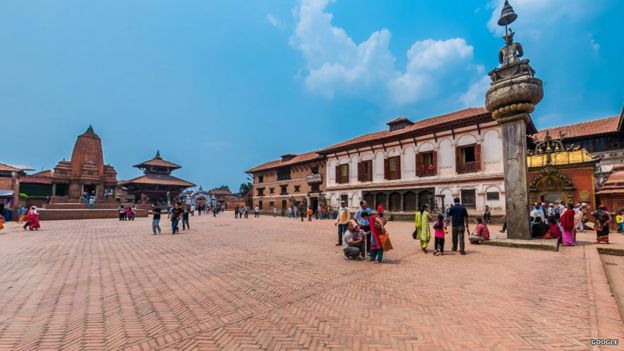
_82593218_bhaktapur_durbar_sq_before

C1 – Advanced

On April 25, 2015, Nepal was hit by a 7.8 magnitude earthquake that cost thousands of lives and left so many injured.

Below is an article to look back on the devastation that hit a country and affected so many. Take a look at the before-and-after photos included in the article.

http://www.bbc.com/news/world-asia-32479909

Discussion Questions:

1. What do you know of the earthquake that hit Nepal in 2015?
2. Have you experienced natural disasters such as earthquakes?
3. What are some catastrophes you’ve witnessed?
4. Is your country prepared in case a natural disaster hits?

Green Energy for Denmark

C1 – Advanced

When it comes to renewable energy, Denmark aims high. By 2020,  the country would like to get half of its energy from the wind. There are hopes that there will be environmental focus to inspire people to go green.

Watch the video below to know more about some of the efforts that Denmark is doing to be a greener country.

Discussion Questions:

1. According to the video, what are organizations doing to be environmentally conscious?
2. Do you think that your country is working on the same issue as well?
3. Is having a green house something that you’re interested in?

Schools Feeding and Clothing Pupils

_82679456_021831941-1

C1 – Advanced

It has been said that the school is the second home of the child. Read the article and discuss the boundaries that schools should have when it comes to taking care of children.

Schools feeding and clothing pupils, say heads

Discuss:

1. What is the concern raised in the article?
2. What do you think should be the primary roles of schools?
3. Describe the educational system of your country.
4. How would you describe the welfare program for poor people in your country?
5. If you could, what changes or improvements would you implement in your country’s educational or social systems?


World Happiness Report 2015

150423130327_1_540x360

C1 – Advanced

Living in different countries, we have different cultures. We all have different definitions of happiness. How would you define Happiness?

Read the article below to know more about the World Happiness Report and its aims or objectives.

World Happiness Report 2015 ranks happiest countries

Discuss:

1. Share some of the happiest moments in your life?
2. Are the people living in your country known for being funny, fun-loving or happy?
3. How would you describe a good and healthy quality of living?

Video: Woman Sues Over Weight-Loss

C1 – Advanced

Some people argue that we live in a world where people are judged by their looks. There are many qualities by which physical appearance is deemed acceptable by modern society: body shape, skin complexion, height and even weight.

Recently, a student sued her own university for allegedly denying her the chance to apply for the dance troupe.

Watch the video then express your ideas on the matter.

Woman sues university over weight-loss suggestion

Discuss:

1. Are there any circumstances when a person’s weight should be factored in for consideration in an organization or activity?
2. Can the situation described in the video be considered an example of discrimination?
3. What adjectives can you use to describe the woman’s feelings? Would you feel the same if you were in her shoes?

Doomsday Kit on Sale

inside doomsday yellow

C1 – Advanced

The prophecy of the Mayan Calendar became such a hype when it predicted the end of the world in 2012. Thus, a Siberian company cashed in on the panic and came up with a survival kit.

Read this article from 2012 and express your thoughts about it.

Doomsday kits go on sale in Siberia as ‘end of the world’ looms…

Discuss:

1. How did you react when you heard about the Mayan Prophecy of the world ending on the 21st of December 2012?
2. Should people preoccupy themselves with predicting when the world will end?
3. If you knew the exact date the world would end, would it change the way you live? If so, in what ways? If not, why?
4. If you had to prepare your own Doomsday kit, what would be in it?


Is changing the clock a waste of time?

large

C1 – Advanced

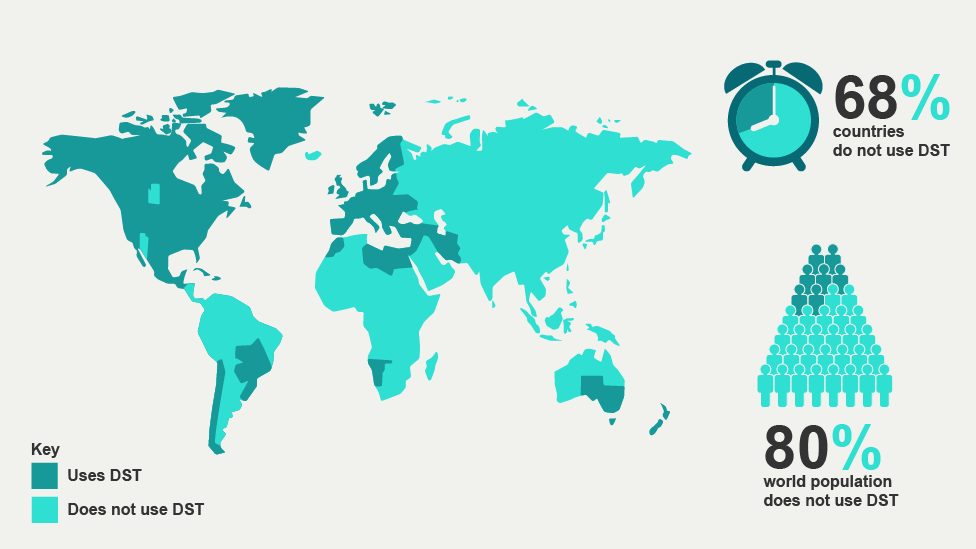
Daylight Saving Time is the practice of advancing standard time by one hour in the spring of each year and of setting it back by one hour in the fall in order to gain an extra period of daylight during the early evening. Many countries observe this change.

Let’s try to know more about its history and significance. Watch the videos and listen to the audio clips with the transcript.

What is daylight saving time?

Every year billions of us around the world observe the familiar ritual of winding our clocks forward in the spring and turning them back again in the autumn.

To the joy of some and the annoyance of others, this biannual time-tampering first steals 60 minutes of our sleep, then gives us all an ‘extra’ hour in bed. Of course, in reality we are neither losing nor gaining time. By shifting an hour of sunlight during the summer months we’re merely making better use of the daylight temporarily available to us in the evenings.

There are many countries worldwide that do not observe daylight saving time (DST) – and in those that do it has had a somewhat chequered and quirky history. Are those of us who meddle with our clocks making time or killing time?

In the UK we observe Greenwich Mean Time (GMT) in the winter months, and advance an hour during British Summer Time (BST). From time to time Parliament has debated the idea of adopting BST throughout the year, but a permanent change is yet to happen.

A permanent change

The case in favour

Those in favour of year-long BST say it would benefit our health and well-being. A 2014 study of 23,000 children in nine countries suggested their activity levels were 15-20% higher on summer days. The Automobile Association estimates that around 100 lives each year would be saved by avoiding traffic accidents on dark evenings.

Year-round BST would also bring the UK into line with Central European Time, helping us to do business with the continent. In the view of the British Association of Leisure Parks, Piers and Attractions this would increase domestic tourism earnings by £2.5-3.5bn.

Meanwhile, an extra hour of evening sunlight in winter could save £485m a year in electricity bills, as households would require less energy to heat and light their homes.

The argument against

Those against a permanent change to BST say it would delay sunrise in northern Scotland until 10am in the winter months. This would leave children at increased risk of accident walking to school in the dark.

Farmers, postal workers and the construction industry have also traditionally supported lighter mornings.

Some say that even if we did move onto BST all year round, we may still end up changing the clocks twice a year. Proposals have been made to adopt GMT+1 during the winter and introduce GMT+2 in summer.

Discuss:

1. What is the resource saying about Daylight Savings Time?
2. Do you see a drawback to having to adjust your clocks on specific seasons?
3. Do you, personally, think that adjusting is a waste of time? Or is this needed?
4. What is the longest night time you have experienced?

Children Spend Six Hours on Screens

_81934166_babieswithtabletsC1 – Advanced

Although TV viewing has dropped, the dramatic increase of children glued to a screen has been observed. They are even using multiple screens. This phenomenon can be accounted for the availability of different media.

Read the article below to know more about the facts regarding children and their screen time.

Children spend six hours or more a day on screens

Discuss:

1. What are the popular tools being utilized by children these days?
2. Do these media post greater threat than good?
3. In your country, how are kids now different from kids then?
4. Do you have any rules for your children when using gadgets?


A Personal Air Vehicle

B2 – Upper Intermediate

The future is now. That is, if we go by the timeline set by the iconic sci-fi movie “Back to the Future.” So where are all the flying cars? According to Professor Missy Cummings in this BBC feature, there are only a few hurdles to the development of personal air vehicles. And technology is not one of them.

Watch the video then read the article and be ready to express your thoughts about the topic.


The idea of having a part car, part plane, part drone parked outside your home may not be as far-fetched as it seems. There really aren’t any technological hurdles to this.
W

We are going to have personal air vehicles that are both cars and planes, at least that’s Missy Cummings’s vision of the future. It’s basically the intersection of a drone with a robotic car, so that your plane is also your car, but the big leap in technology is that you are actually driving neither, says the Associate Professor of Aeronautics and Astronautics at the Massachusetts Institute of Technology.

Drones have a negative bias in the media, says Cummings, because they are essentially seen as spy cameras. But most people don’t realise that when they are on a plane they are effectively travelling on a drone. The fly-by-wire technology that exists on all Airbus and many Boeing craft is the exact same technology that exists on drones.

The reason why drones are the answer to the future is that the truth is we are terrible drivers. Humans inherently have a half-second lag in almost any quick response that they need to have, like a ball rolling out in a street or seeing an aircraft in the sky and you have to take evasive action. Even a half-second delay can mean the difference between life and death, and computers and automated systems don’t have that – they have microseconds.

So, our transportation network of the future, both on the ground and in the air, will actually be safer when we turn it over to computers.

There really aren’t any technological hurdles to this idea, says Cummings. The biggest hurdles we have are psychological and cultural, in terms of giving up the car. But no new tech needs to be developed to have your own personal flying car. What we have to do is improve production and reduce manufacturing costs, and what that means is that we need more robots. So this is almost a self-circular process, where we need robots to build robots to make them cheaper.

Should we worry about the machines rising up and taking over? No, what Cummings says she is worried about is hackers and terrorists who want to do wrong. One of the things she is working on is trying to develop technology that allows any flying robot to be able to fend off any attack and be able to navigate itself without any GPS or any other external signal.

There are lots of different possibilities for what your personal air vehicle could look like. You could own your own in your driveway or garage, and you could jump in it. Or we could have a shared network like the plane version of Zipcar. People should be excited about this: it promises much in terms of safer travel, and in parts of the world where the road and air networks are poor, people will be able to get the goods and services they need.

So, when we look at globalising this concept of personal air vehicles, it means we will see the quality of life improve dramatically for everyone around the world

Discussion Questions:

1. Would owning a personal air vehicle simplify or complicate our lives?
2. What are the hurdles that prevent the full realization of the flying car?
3. If personal air vehicles will essentially be robots, what can be done to ensure that they will be hacker-proof?