Reversing the Aging Process

B1 – Intermediate

Aging is associated with changes in dynamic biological, physiological, environmental, psychological, behavioral, and social processes. Some age-related changes are benign, such as graying hair. Others result in declines in function of the senses and activities of daily life and increased susceptibility to and frequency of disease, frailty, or disability. In fact, advancing age is the major risk factor for a number of chronic diseases in humans.

The question on all our minds is, ‘ Is it possible to reverse aging?’

Let’s read the article below to find out.

https://breakingnewsenglish.com/2011/201125-ageing-process-1.html

Discussion Questions:

  1. What did you think when you read the headline?
  2. What are some of the benefits of getting older?
  3. Is aging more difficult for men or women? Why?
  4. Although women live longer than men, it is sometimes said that men “age” better than women. What do you think?
  5. What do you think can you do for yourself to help you age better with improved mobility and strength? When do you think you should start doing this?

Gorilla Glass Toughest Smartphone Screen

B1 – Intermediate

Most people has a mobile phone. We take care of it because it is a very important device for us.

Every gadget owner’s worst fear is dropping their phone and breaking the glass on its screen. However, as technology advances, the glass used as material in making our mobile phone screens has also been improved a lot.

Read this lesson about the most durable smartphone screen.

https://breakingnewsenglish.com/2007/200728-smartphone-glass-1.html

Discussion Questions:

  1. What is your reaction to this news on tougher mobile phone screens?
  2. Have you ever dropped your smartphone and break its screen? What did you do when that happened?
  3. What other improvements or technology do you want to see in mobile phones?

Are Food Preservatives Bad for You?

B2 – Upper Intermediate

Food preservatives are substances added to food items in order to inhibit, retard or arrest the process of fermentation, acidification, and decomposition of food items’. Or, in other words, they are a type of  food additive  which prolong shelf life and keep products from being broken down by microorganisms

But the question is, how safe are they? Watch the video and be able to discuss the questions that follow:


Discuss:

  1. What are the benefits of using preservatives in food?
  2. What do you think about preservatives? Are they beneficial or harmful?
  3. Do you seek out preservative-free food?
  4. What are some ways of preserving food in your country?
  5. What are some of the most popular preserved food in your country?

Digital Cloning

B1 – Intermediate

Cloning has long been a subject of debate since the year dot. Supporters of cloning claim that it is the answer to preventing endangered species from disappearing as well as allowing human beings to live healthier lives. But just recently, another form of cloning has come to rise – digital cloning, wherein a copy of your “self” will be created online.

Read this blog about digital heaven.

Digital Heaven

If you had the opportunity to live forever, would you take it? The obstacles to keeping your body alive indefinitely still seem insurmountable, but some scientists think there is another possibility opened up by digital technology: creating a digital copy of your “self” and keeping that “alive” online long after your physical body has ceased to function.

In effect, the proposal is to clone a person electronically. Unlike the familiar physical clones – offspring that have identical features as their parents, but that are completely separate organisms with a separate conscious life – your electronic clone would believe itself to be you. How might this be possible? The first step would be to map the brain.

How? One plan relies on the development of nanotechnology. Ray Kurzweil – one of the prophets of artificial intelligence – predicts that within two or three decades we will have nanotransmitters that can be injected into the bloodstream. In the capillaries of the brain they would line up alongside the neurons and detect the details of the cerebral electronic activity. They would be able to transmit that information to a receiver inside a special helmet or cap, so there would be no need for any wires protruding from the scalp.

As a further step, Ray Kurzweil also envisages the nanotransmitters being able to connect you to a world of virtual reality on the internet, similar to what was depicted in the film ‘Matrix’. With the nanotransmitters in place, by thought alone, you could log on to the internet and instead of the pictures coming up on your screen they would play inside your mind. Rather than send your friends e-mails you would agree to meet up on some virtual tropical beach.

For Ray this would be, quite literally, heaven. Once you upload the brain onto the internet and log on to that virtual world the body can be left to rot while your virtual self carries on playing Counter Strike for ever.

Generations of Christians believed in Christ partly because his resurrection held out the promise that we too might be able to enjoy life after death. But why wait for the Second Coming when you can have a shot of nanobots and upload your brain onto the internet and live on as an immortal virtual surfer?

Who needs faith when you’ve got broadband?

(One snag: to exist on the net you will have to have your neural network parked on the computer of a web-hosting company. These companies want real money in real bank accounts every year or they will wipe your bit of the hard disc and sell the space to someone else. With your body six feet underground how will you pay? Here the anology with heaven really breaks down. God keeps heaven going for free, but the web is something you have to pay for.)

Vocabulary Questions:

  1. What does “cease” mean, “Creating a digital copy of your “self” and keeping that “alive” online long after your physical body has ceased to function.”? Use it in a sentence.
  2. What does “insurmountable” mean, “The obstacles to keeping your body alive indefinitely still seem insurmountable.”? Use this word in a sentence.
  3. What does “virtual” mean, “Rather than send your friends e-mails you would agree to meet up on some virtual tropical beach.”? Use it in a sentence.

Discussion Questions:

  1. What do you think about ‘digital cloning’?
  2. Would you like to be cloned and/or digitally cloned? Why/why not?
  3. With this technological advancement, how do you see the future of humanity?
  4. What can you say about the the last statement-question ‘Who needs faith when you’ve got broadband’?

Science Fiction and the Future

C2 – Proficient

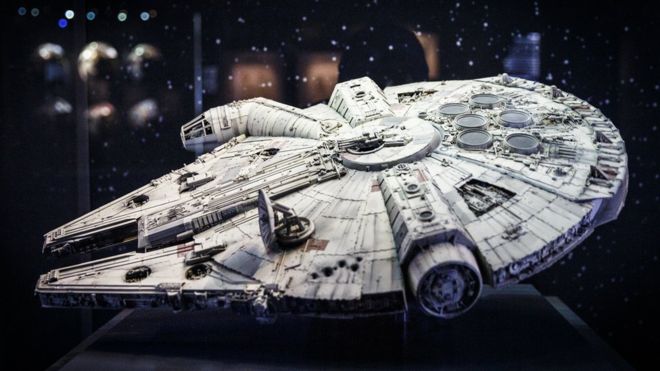
Can science fiction actually help predict the future? Watch the video to find out.

Discussion Questions:

1. Science fiction writer Arthur C. Clarke once said that any sufficiently advanced technology is indistinguishable from magic. What does that mean?
2. Do you think science fiction can help predict the future?
3. What technological advancements from science fiction do you think are very realistic and possible to exist in the future?

NASA Developing Food Bars for Mars Flights

B2 – Upper Intermediate

When you go travel somewhere, probably, one of the things you would usually pack is food. Ever wonder how astronauts’ food are prepared for their space travel?

Read the article and watch the video. Be ready for a discussion.

http://learningenglish.voanews.com/a/nasa-developing-food-for-mars-flights/3625387.html

Discussion Questions:
1. What are the things to consider and challenges encountered preparing food for Mars explorations?
2. What are your thoughts on Mars space missions?
3. What do you think of the idea that we could escape into space if (or when) the earth becomes uninhabitable for whatever reason?
4. If you would be sent to space, what food items would you want to bring with you and why?
5. Should rich countries invest more money on these efforts?

Sci-fi Inventions That Became Reality

_92503693_gettyimages-622392842

C1 – Advanced

In the recent years, we’ve seen advancements in technology, some of which look like something that came straight out of sci-fi films or novels.

Discover fictional inventions that we are seeing in real life now.

https://www.bbc.com/news/health-38026393

Discussion Questions:
1. Talk about a fictional technology you saw in a movie or read from a novel that became a reality.
2. What is a sci-fi invention that you would like to see in the near future?
3. Give some examples of technology that have made the world worse.

Near-Earth asteroids – How Dangerous Are They?

B1 – Intermediate

Space agencies have started looking at the skies for near-earth asteroids that could potentially hit Earth. They believe these asteroids can be a threat to our planet.

Read the article below to get some interesting facts about asteroids.

http://www.english-online.at/news-articles/science/near-earth-asteroids-how-dangerous-are-they.htm

Discussion Questions:

  1. How do you feel about the possibility that one day the world would be hit by a big asteroid?
  2. If the Earth were to be destroyed, what are the things you’d do before it happens?
  3. Other than asteroids, what other threats does the Earth face?

15-Year-Old Puts Cancer Industry To Shame

B2 – Upper intermediate

The Big C. The disease has cost many lives and millions of dollars. Studies and research are continuous to help combat the disease.

Read the article below then watch the video of Jack and how he was able to contribute in the fight against cancer.

15-Year-Old Puts Cancer Industry to Shame: Develops 100% Accurate Cancer Test Using Google

Discuss:

1. How do you feel about cancer in general?
2. Why do you think more and more people are suffering from this illness?
3. Aside from cancer, what other diseases should be given a lot of attention and funding?

The International Space Station

B1 – Intermediate

Scientists want to know a lot of things beyond the planet Earth we live in. That is possible only by traveling to space. That requires a lot of studies, work, and sacrifice.

Whatever man would find beyond our lovely planet, it will always be true that research is endless and that most things that man discovers are mind-boggling.

Read more about the International Space Station.

english-online.at/technology/international-space-station/international-space-station.htm

Discussion Questions:

  1. What comes to your mind when you hear “the ISS”?
  2. Would you like to stay at the ISS? Why or why not?
  3. Why is it important to keep studying space?