Physical fitness is a very important issue. Especially today, because most people now have a lifestyle that is less active.
Staying active and doing some exercises will give your body better performance and help make your muscles be stronger. It will also keep your weight under control.
Click the title below and be ready to discuss new phrases about exercise and health.
People around the world work with minimum wage. A minimum wage is the lowest daily or monthly remuneration that employers may legally pay to workers. Which country has the best minimum wage in the world? Let’s take a look!
Low wage workers in Australia have it better than most.
The country has the most generous national minimum wage in the developed world, according to a report from the Organisation for Economic Co-operation and Development.
The report ranked 27 countries that have laws setting a nationwide minimum rate of pay.
Australia’s minimum wage workers — aged 21 and over — make 15.96 Australian dollars per hour. After tax and other deductions, that’s equivalent to $9.54, once the difference in the cost of living is taken into account.
“They have a high minimum wage. And interestingly they have a low tax burden,” said Herwig Immervoll, the author of the OECD report. “[Australians] recognize that supporting low wage earners through the tax system is important.”
Other countries have set higher hourly rates but they also tax minimum wage workers more, leaving them with less in their pockets.
Australian workers on the minimum wage make the equivalent of $10.38 per hour, which works out to $9.54 after tax.
The U.S. ranked 11th on the list, with a federal minimum wage of $7.25 per hour. That leaves workers with take-home pay of $6.26 per hour.
However, the U.S. would move up the rankings if state minimum wage rules were factored into the equation. Roughly half of U.S. states have rules ensuring workers are paid more than the federal minimum, Immervoll said.
The OECD report shows that a single Australian minimum wage worker with two kids could work just six hours per week to lift themselves above the poverty line, because they would also receive state benefits.
In the U.S., the same worker would have to clock in 50 hours per week to escape poverty. In the Czech Republic, it would take 79 hours of work per week.
Eight countries, including Finland, Sweden and Switzerland, were not included in the report because their governments do not set national rules on minimum pay. Many of them have strong labor unions and established arrangements for collective bargaining, which means governments don’t have to step in.
Here are the top five countries for hourly minimum wages, based on the latest OECD data from 2013:
1. Australia – $9.54
2. Luxembourg – $9.24
3. Belgium – $8.57
4. Ireland – $8.46
5. France – $8.24
Countries with the lowest take-home minimum wages include Latvia, Chile and Mexico, which is bottom of the list with a rate of about $1 per hour.
— An earlier version of this article incorrectly stated the U.S. federal minimum wage was $7.85. It is $7.25.
Discussion Questions:
1. What is the minimum wage in your country? 2. What do you think should be the ideal minimum wage in your country? 3. How does salary affect the performance of an individual at work?
Jack Cator was your normal teenage school boy; defying and challenging the rules. But what he got out of that persistent attitude was quite extraordinary.
Read the article below to know more about Jack and his business and its humble beginnings.
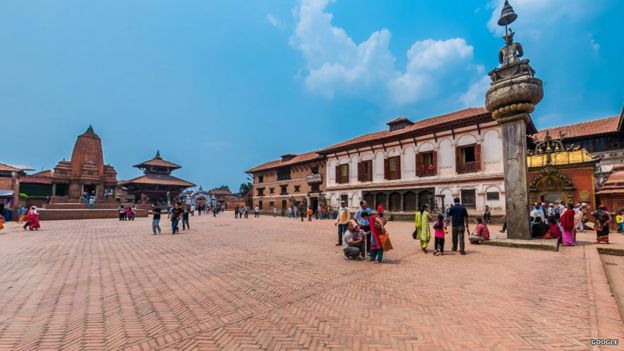
On April 25, 2015, Nepal was hit by a 7.8 magnitude earthquake that cost thousands of lives and left so many injured.
Below is an article to look back on the devastation that hit a country and affected so many. Take a look at the before-and-after photos included in the article.
1. What do you know of the earthquake that hit Nepal in 2015? 2. Have you experienced natural disasters such as earthquakes? 3. What are some catastrophes you’ve witnessed? 4. Is your country prepared in case a natural disaster hits?
Double negatives in a sentence or clause are often confusing, that is why teachers tell students to avoid using them. They are also considered a taboo in English grammar.
Watch the video then read the article below to know more about the origin of double negatives and how it can be used properly.
1. Explain the two kinds of double negatives. 2. Which double negative should be avoided when taking exams or when applying for school or a job? 3. Give your own examples of double negatives.
Human trafficking, by definition, is the trade of humans, mostly for the purpose of sexual slavery, forced labor or commercial sexual exploitation for the trafficker or others. Millions of people are being trafficked at any given time. Prostitution is akin to trafficking and is a social problem difficult to abolish.
Watch the video to know about Ope’s story then read the article for extra information.
Dave Goldberg was a very successful entrepreneur who died of a severe head trauma after falling off a treadmill. The cause of the fall isn’t clear yet. Some people would call Goldberg’s death a freak accident.
Read the article below to have more information on how dangerous some exercise equipment can be.
1. After reading the article, do you think using a treadmill is that dangerous? 2. What other considerations do we need to take before we use any exercise machine? 3. Do you know of any other gym-related accidents?
1. What are some of the interesting things (facts, food or culture) that you’ve come across with? 2. When was the last time you came down with something? How serious was it? What do you do stay healthy? 3. Have you ever cancelled an event or a meeting because something came up? 4. Who comes up with vacation ideas in your family?
1. Have you ever put something off because of an emergency? 2. What are some of the reason you’d be put off by something like a film or a topic? 3. What commodity prices have been put up recently? 4. Have you ever put someone up during their vacation? Has anyone done the same for you? 5. What are some of the things that you can put up with and some things that you can’t?