Myanmar and Iraq Most Generous Countries

B2 – Upper Intermediate

There’s a saying that goes, “It’s better to give than to receive.

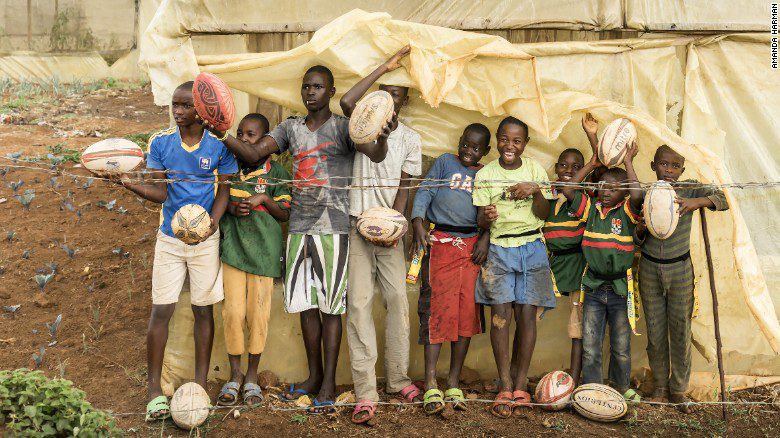
This is what Burmeses and Iraqis are trying to do in their lives. The Charities Aid Foundation (CAF) found that Myanmar is the country where the most generous people in the world live. While the most helpful people to strangers are from Iraq.

Read the article about how people from the countries Myanmar and Iraq are the most generous in the world.

http://www.breakingnewsenglish.com/1610/161028-charity.html

Discussion Questions:

1. What are your thoughts on the results of the study?
2. Do you think doing charitable acts are necessary? Why or why not?
3. Would you say being generous and helpful are two traits that most Spanish people have?
4. What’s the most generous thing you’ve ever done?
5. Name some important charities in your country.

American Voters Decided More Than Just the Presidency

5943474c-5d9d-430e-9535-ba6e2e09f4f3_cx0_cy4_cw0_w987_r1_s_r1

B2 – Upper intermediate

And so the United States presidential election is over. The country has a new president, who will take office in January of 2017. There is mixed emotions on the results. But voters were not only choosing who the best candidate should take office. They were also hopeful that certain policies would change.

Read the article below to know more about policy measures that Americans are trying to work on.

American Voters Decided More Than Just the Presidency

Discuss:

1. Is marijuana legal in Spain? What about medical marijuana?
2. Are you able to possess any type of gun in Spain? Do you think it makes you any safer owning a gun?
3. What is the minimum wage in Spain? Do you think you can live off of the current minimum wage in the States at $7.25 an hour or 6.75 Euro?
4. Do you know when they stopped implementing the death penalty in Spain? Do you agree with having the death penalty?
5. Is euthanasia legal in Spain? Do you think someone has the right to decide to end his/her life if he/she is suffering from a terminal disease?

Unexploded Bombs Still a Problem in Laos

713a95c5-6bb8-436d-aafb-462838383f7f_w987_r1_s

B2 – Upper intermediate

Most countries have many remembrances of past wars. Unfortunately, in countries like Laos, these reminders still have the power to injure them.

Read the article below and express your thoughts about it.

Unexploded Bombs Still a Problem in Laos

Discuss:

1. Who do you think is responsible for the clean up of the remaining bombs?
2. Should the USA pay for the medical bills of those people who are affected by the bombs or should it be charities?
3. Do you think that bombs today are more sophisticated because of advanced technology?

Developing Post-Traumatic Stress Disorder

B2 – Upper intermediate

There are many differences between males and females. And dealing with stress is one of them. Read the article below to know more about PTSD and how stress affects specific gender.

Boys and girls react differently to stress

 Discuss:

1. What do you know about post-traumatic stress disorder (PTSD)?
2. What damage does stress do to the body? How does it change people?
3. Who do you think are emotionally stronger, boys or girls?
4. What are some of the world’s most stressful job?

Reasons We Don’t Call in Sick

B2 – Upper Intermediate

Most of us can choose to go on as many sick leaves as we want but for some reasons, we decide not to take advantage of this work benefit.

This BBC article offers explanations as to why many people choose to still go to work even if they are already very ill.

http://www.bbc.com/capital/story/20161101-the-reasons-we-dont-call-in-sick-when-we-are-ill

Discussion Questions:
1. Kindly name some reasons why people choose not to take a time off of work when sick.
2. Have you ever gone to work even if you were very sick? If yes, Why did you do it? If not, why so?
3. Do you think “Working on sick leave, weekends and vacations has become the norm”?
4. How is absenteeism rate monitored in your company?
5. Talk about leaves (vacation and sick days) in your country.

English Idioms

B2 – Upper intermediate

The use of expressions, phrasal verbs and idioms are one of many ways to increase vocabulary.

The module below will serve as your study guide for expanding your vocabulary through idioms. Feel free to go through the module in sections or chapters and be ready to use them in sentences.

English Idioms

Discuss:
1. When was the last time you were under the weather and had to stay home?
2. Describe a time you were over the moon? What happened?
3. Do you sometimes get butterflies in your stomach?
4. Talk about a time you bought something that cost you an arm and a leg.

Business Podcast – Selling Nostalgia

B2 – Upper intermediate

There are many things that one considers when buying certain products. Is connection to tradition something that makes you buy a product?

In this lesson, listen to the podcast and discover how some producers use tradition as a marketing campaign.

Discussion Questions:
1. How are traditions used as a means to make people buy some products?
2. What are the factors you consider when you are buying a product?
3. Talk about one product / service offered by your company. How would you sell it to someone?
4. Do you follow New Year’s Eve traditions like drinking Spanish champagne and eating 12 pieces of grapes?

Ways To Drive Traffic To Your Website

B2 – Upper Intermediate

Almost everyone in the world is on the world wide web nowadays. Doing business online has never been more important for businesses in offering their products and services and for reaching out to their target markets.

Read the article below and be ready to answer the questions that follow.

https://www.forbes.com/sites/robertadams/2017/04/10/23-proven-ways-to-drive-traffic-to-your-website/?sh=668d84ec2654

Discussion Questions:
1. What do you think of Jeff’s idea to compete against yourself? Do you think this would work?
2. What are the benefits and drawbacks for a business to go online?
3. Does your company do business over the internet?
4. What features do you look for in a website when doing some transactions?
5. How do online businesses make the market competitive?

Migrants Storm Border in Spain’s Ceuta

B2 – Upper Intermediate

African migrants usually climb the fence that separates Morocco from Spain. If someone manages to scale those fences, he lands in Europe. Tens of thousands of African and Arab migrants try to do so each year. Many have traveled hundreds of miles already, mostly from sub-Saharan Africa, but also from conflict zones like Syria or Somalia.

https://www.thelocal.es/20161101/over-200-migrants-storm-border-in-spains-ceuta

Discussion Questions:

1. Is immigration from one country to another a problem? In what ways do you see it as a problem?
2. Do you think that immigrants (legal or illegal) are treated well in most countries?
3. Do you think immigration and crime are closely related?
4. Should any government limit the number of immigrants entering the country?
5. Is local culture threatened by immigration?

No More Homework!

B2 – Upper Intermediate

For years, schools have always given homework to students every single day. But recently, school officials, as well as parents, are saying no to more homework. A group of parents in Spain have recently gone on strike to protest their children’s school load.

No more homework! Spanish parents go on strike

Children have long complained about homework but parents in Spain are now joining in and have decided to go on strike against their offspring’s school load for the whole month of November.

Called by the Spanish Alliance of Parents’ Associations (CEAPA), a network that covers some 12,000 state schools across the country, the strike targets weekend homework for primary and high school students.

Jose Luis Pazos, president of the CEAPA, told AFP Wednesday parents had launched the unprecedented initiative due to “the absolute certainty that homework is detrimental” to children, damaging their extra-curricular development.

According to a 2012 PISA education report by the Organisation for Economic Cooperation and Development, Spain was the fifth nation with the most homework after Russia, Italy, Ireland and Poland out of 38 countries studied, with 6.5 hours a week compared to an average of 4.9.

The workload does not necessarily translate in better results for Spanish students, whom the PISA report traditionally gives low scores in maths, reading and science.

By contrast, in Finland and South Korea — two of the countries with best student performances according to PISA — the average time spent on homework every week was less than three hours.

Pazos said that education in Spain was still very reliant on the traditional method of rote-learning — memorising work.  

Pointing to the availability of information in current society, he said that “what we have to teach children isn’t to memorise everything, but how to manage information, to be critical, to select what is worth it and what isn’t.”  

“Society has changed deeply, but the environment in the classroom hasn’t.”

Discussion Questions:

1. What do you think of the article?
2. Are you for or against giving homework to students?
3. What are the advantages and disadvantages of giving homework to students?
4. What was the most difficult homework you had to do when you were still a student?