Self-Driving Electric Delivery Trucks

B2 – Upper Intermediate

Here’s a short article about how technology in driving is getting more and more advanced. Read the article below then express your thoughts about it.

http://fortune.com/2017/12/07/anheuser-busch-tesla-semi-trucks/

Discussion Questions:

1. Do you think there still should be a human passenger to monitor driver-less vehicles?
2. Do you think having driver-less vehicles will be a positive or negative thing in the long run?
3. Do you know if there have been any testing of driver-less vehicles in your country or laws passed to allow them?

Video: ‘Cute’ Cuisine is a Bitesize Art

B2 – Upper intermediate

It’s no secret that cooking has evolved over the years. We’ve experienced fine dining cuisine where a small quantity of food is artistically placed on the plate. Then we had molecular gastronomy where science meets art and gives birth to an innovative way of having a meal.

Now, a new trend called miniature food has gone viral on Youtube and viewers just can’t get enough of it. Watch the video below then express your thoughts.

‘Cute’ cuisine is a bitesize art

Discuss:

1. What were your thoughts when you were watching the video?
2. How did the trend of miniature food and cooking happen? Explain what “Kawaii” is.
3. What are some Japanese art that you find interesting?
4. Describe some of the good and fancy restaurants that you’ve been to in the past.

Discovering Your Ancestors

B2 – Upper Intermediate

Knowing your roots and discovering your history is always a fascinating idea. There’s a sense of wonder and mystery as we try to find out who we are.

Websites such as Ancestry.com have been garnering a number of clients as more and more people are getting curious in tracing their genealogy.

Read the article below and be ready to answer the questions that follow.

There has been a surge in genealogy websites in recent years, proving that more and more Americans want to trace their family history. Records, such as ship registries and marriage and death certificates, are digitally scanned and available online for the sleuths, too. And now there’s a new option: photo detectives.

Armed with fashion magazines and an eye for detail, photo detectives hunt for clues in old photos. Hair styles, clothes and fashion, and the objects in the pictures help detectives pinpoint dates, places, and professions. The job also requires an expert’s knowledge in social history. For example, a photo of a woman with unusually short hair in the 19th century could mean that she had scarlet fever. A person sick with the disease often had their head shaved. Or a photo of a baby carriage in the mid-1800s could be an announcement that the infant had died, instead of recording his birth. The period had a very high infant mortality rate, and death cards were often sent to family and close friends. These are only some of the facts that photo detectives must have at their fingertips.

Photography was invented in the 1830s. The earliest photos usually required a visit to the studio by the whole family, which was a lengthy and formal process. But when Kodak invented the snapshot in the 1880s, family collections grew with shots of birthdays, holidays, and everyday life. Unfortunately, most people didn’t consider labeling the pictures. The descendents now find it troublesome to identify the old pictures.

Photo detectives can help. But customers may not always like the results, as sometimes the answers disagree with family lore.

Source: headsupenglish.com

Discussion Questions:

1. Do you think it’s important to trace your family’s history? Why/not?
2. What do you know about your grandparents? How about your great-grandparents?
3. Do you have old photos at home? If yes, are there people in the photos you can’t recognize?
4. Would you ever consider hiring a photo detective to tell you more about your family? Why/not?
5. How would you feel if you discovered one of your ancestors was a terrible person?

British People Commit Micro Crimes

B2 – Upper Intermediate

Micro crimes are minor criminal offenses. Turns out, 3 out of 4 British people have, at one point in their lives, committed a micro crime.

Just what exactly is a micro crime and how serious is it?

Read the article below to discover the findings of a research done about crime. Be ready to answer discussion questions afterward.

http://www.breakingnewsenglish.com/1610/161026-micro-crime.html

Discussion Questions:

1. What do you think of micro crime?
2. How is micro crime different from the usual crimes we hear of?
3. Why do men and the middle class commit more micro crimes?
4. What crimes do you worry about in your country?
5. What should the punishment be for micro crimes?

Why Finland’s Schools are Successful

B2 – Upper Intermediate

Finland has been delivering educational excellence to its children and this country’s success in education has other nations doing their research.

Click on the link below to find out why Finland’s schools are successful.

http://www.english-online.at/news-articles/education/finlands-school-system-is-successful.htm

Discussion Questions:

1. What makes Finland’s schools successful?
2. Tell me about your country’s educational system.
3. Do you think your country would benefit if it follows Finland’s way?
4. What can your country adopt from Finland’s educational system?

Jungle Marathon: A Dangerous Race

B2 – Upper intermediate

Marathon events are held everywhere all around the world. And, with its increasing popularity, different variations of marathon race are conducted. One of these is the Jungle Marathon. This is not your typical marathon, as some people say that this is one of the most dangerous races one could ever experience. Let’s find out why.

http://www.newsinlevels.com/products/jungle-marathon-level-3/

Discussion Questions:

1. Have you ever joined a marathon before?
2. Do you think the Jungle Marathon is dangerous?
3. Why do you think a lot of people are into marathon races?
4. Would you like to try this in the future?
5. What other sporting events have you tried or are you willing to try?

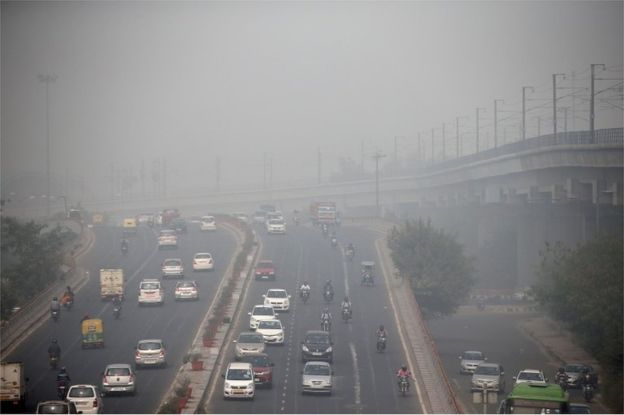
Million Deaths Each Year to Air Pollution

27pollution1-master768

B2 – Upper Intermediate

Air pollution ranks number four in the leading cause of death. It has directly affected many young children and has caused unemployment in men and women.

Read more about this by clicking the link below.

https://www.nytimes.com/2016/06/27/business/energy-environment/study-links-6-5-million-deaths-each-year-to-air-pollution.html

Discussion Questions:

1. How can air pollution be slowed down?
2. What are alternative sources of energy that can be used in order to slow down air pollution?
3. In your own little way, how can you fight against pollution?
4. Does your country have very aggressive projects or initiatives related to the care of the environment?

China Wants To Become A Soccer Superpower

chinese-football-team

B2 – Upper intermediate

Traditionally a sport dominated by European countries, soccer is a sport where a lot of Asian countries have not been really good at until recently. That is all about to change as China has announced its plan to become a soccer superpower.

Read about China’s big ambitions by clicking the link below.

http://www.english-online.at/news-articles/sports/china-wants-to-become-soccer-superpower.htm#

Discussion Questions:

1. Why is soccer so popular in the world?
2. Do you think China will be able to reach its goal of being a soccer superpower?
3. Do you think Chinese soccer teams stand a chance against Spanish/European ones?
4. What sports do you play? What are some you find very interesting?

What Is Branding

B2 – Upper Intermediate

The businessdictionary.com defines “branding” as “the process involved in creating a unique name and image for a product in the consumers’ mind, mainly through advertising campaigns”.

Watch this video explaining what branding is in a nutshell.

Discussion Questions:

  1. What did you learn about branding from the video?
  2. What are ways to build a strong corporate identity?
  3. How do you think branding has changed because of social media and the internet?
  4. What is your company’s branding like? How can it be improved?
  5. Name some companies you think has the best and the worst branding. Describe their brand and explain why you find it impressive or otherwise.

Free Speech: Is Saying Something Offensive Fine?

B2 – Upper Intermediate

In 2015, The Pew Research Center conducted a survey on 38 countries to elicit their thoughts on freedom of speech. The results might come as a surprise, yet it is indeed very timely.

It is perhaps high time to open conversations on the importance of creating safe spaces and setting trigger warnings to protect students from learning materials or expressed opinions that might be troubling for them.

Listen to this podcast and be ready to answer the questions that follow.

http://learningenglish.voanews.com/a/free-speech-is-it-fine-to-say-something-offensive-students-college-vietnam/3555231.html

Discussion Questions:

  1. What are “safe space” and “trigger warning”? How are they important especially to students?
  2. What is your opinion on free speech at educational institutions?
  3. Are students free enough to express their opinions during class discussions?
  4. Should teachers be able to express their honest opinions on every matter or should they consider their students beliefs as well?
  5. Do you think the media in your country is able to report news freely?
  6. What may be the advantages of censorship?